2024 International Research Software Funders Workshop
Towards a monitoring framework to benchmark the ADORE.software recommendations and improve the sustainability of research software
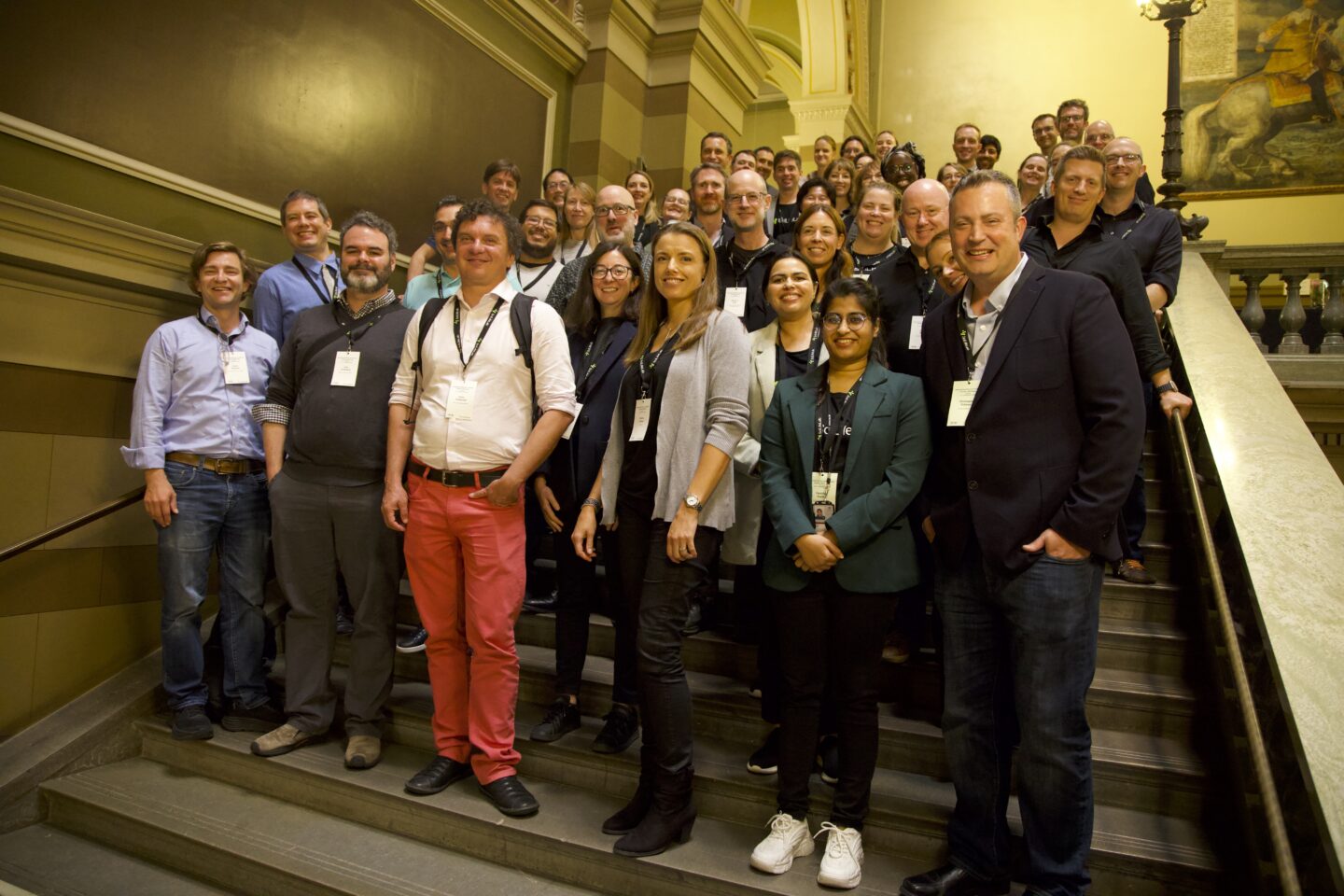
The 2024 International Research Software Funders Workshop continued to progress the way funders sustain and support research software. The SciLifeLab Data Centre and the Research Software Alliance (ReSA) co-hosted this hybrid event that took place from 11–13 September 2024 in Uppsala, Sweden. The workshop brought together more than 50 funders and experts in research software to discuss operationalising the Amsterdam Declaration on Funding Research Software Sustainability (ADORE.software). ADORE.software aims to raise awareness of the role of funding practice in the sustainability of research software, and to improve that practice.
Read all the details in the resulting blog post. See also SciLifeLab and Data Centre co-host two events: Elevating the importance of research software in Sweden and Building the future of research software as a first-class citizen in science; a global perspective. Presentations from this year’s Funder Workshop and the EVERSE (European Virtual Institute for Research Software Excellence) satellite event are available here.
This year’s workshop focused on developing funders’ monitoring and evaluation frameworks to assess what is working and why in funders’ support for research software impact. Eric Jensen, a monitoring and evaluation expert, facilitated the workshop.
The workshop, focusing on monitoring and evaluating (M&E) of research software impact, was divided into three parts:
- Day 1 focused on existing data and research on the impact of research software to help establish what is already known from previous monitoring, evaluation and research. What should be our goals with M&E focusing on research software impact? What is ‘research software impact’? What do we already know about effective ways of measuring and surfacing research software impact? Why are these outcomes being measured and how? This part of the workshop focused on sharing key lessons and insights from existing evidence and how they are used by funders, which served as a foundation for the discussions in Day 2.
- Day 2 was a hands-on workshop to discuss the priority monitoring and evaluation questions for research software funding to be addressed in the future. What insights will help to elevate research software’s impact? What gaps in evidence about research software impact need to be addressed, and what data is needed to address them? This part of the workshop clarified potential shared priorities for outcomes to be measured across different research software funders.
- Day 3 focused on planting the seeds for monitoring and evaluation frameworks to address shared needs and interests of research software funders.
Participating organisations
- Alfred P. Sloan Foundation
- Aligning Science Across Parkinson’s (ASAP)
- Australian Research Data Commons (ARDC)
- Austrian Science Fund (FWF)
- Barcelona Supercomputing Center (BSC)
- CERN
- Chan Zuckerberg Initiative (CZI)
- DataSeer
- DeSci Foundation
- Digital Research Alliance of Canada
- ELIXIR UK
- EMBL-EBI
- GitHub
- INCF
- Institute of Applied Biosciences, Centre for Research and Technology Hellas
- Invest in Open Infrastructure
- Japan Science and Technology Agency (JST)
- Journal of Open Source Software
- NASA
- Netherlands eScience Center
- NIH
- OLS
- OpenAIRE
- Research Software Alliance
- RISE Research Institutes of Sweden
- Schmidt Sciences
- SciLifeLab
- Software Sustainability Institute
- Sovereign Tech Fund
- Stockholm University
- Swedish Research Council
- Talarify
- The Kavli Foundation
- The Medical Research Council (UKRI)
- UK Research and Innovation
- Université de Lorraine
- University of Illinois Urbana-Champaign
- University of Manchester
- University of Missouri
- University of Texas at Austin
- Uppsala University
Organisers and Steering Committee
This event was jointly organised by The SciLifeLab Data Centre and the Research Software Alliance (ReSA).
ReSA advances the research software ecosystem by collaborating with decision makers and key influencers. ReSA’s vision is that research software and those who develop and maintain it are recognised and valued as fundamental and vital to research worldwide.
SciLifeLab is a national infrastructure of unique technologies and expertise available to life scientists, closely intertwined with our community of researchers in areas such as biomedicine, ecology and evolution. We bring scientists together across traditional boundaries and foster collaborations with industry, health care, public research organisations and international partners.
The vision of SciLifeLab Data Centre is to position Sweden at the global forefront of data-driven life sciences research. Their mission is to facilitate world class research and enhance research quality by offering a suite of impactful services.
Steering & Programme Committee
- Johan Rung, Hanna Kultima, Chris Erdmann, Anna Henriksson, Parul Tewatia, Harshita Gupta, Jonas Windhager (SciLifeLab)
- Daniel S. Katz, Eric Jensen (University of Illinois Urbana-Champaign & ReSA)
- Michelle Barker, Kim Hartley (ReSA)
- Colette Bos, Maaike de Jong (Netherlands eScience Center)
- Laetitia Bracco (Université de Lorraine)
- Melissa Harrison (EMBL-EBI)
- Maria Cruz (NWO Dutch Research Council)
- Andrew Treloar (Australian Research Data Commons)
- Dario Taraborelli (Chan Zuckerberg Initiative)
- Josh Greenberg, Liz Vu (Alfred P. Sloan Foundation)
- Richard Gunn (UK Research and Innovation)
- Qian Zhang (Digital Research Alliance of Canada)
- Caxton Murira (Science for Africa Foundation)
- Giulia Malaguarnera (OpenAire)